Showing posts with label African culture. Show all posts

Friday, August 17, 2012

Summer Reading


gratuitous photo of the kids "reading".

As a teacher, I always look forward to summer... to sleeping in, to days at the beach, and mostly to being able to read as much as I want. I'm the type of reader who gets consumed by books. I'll read until my head is aching and my stomach grumbling. I think I lost a few pounds reading the Harry Potter series; I was so engrossed in the books I forgot to eat!

As a mom, I don't get to sleep in anymore, in any season, and a day at the beach requires waaaay too much equipment (plus I'm terrified of one of them drowning in a rip tide.) But reading, yes, I did get to read a lot this summer.  I even overcame my hatred of "e-books" and read a few on an old Kindle.

I started with The Hunger Games trilogy- I may have been the last human to read that series, or maybe it just seemed that way.  Although diverting, I found that the violence level was too high for my taste.  Avoxx's?... shudder.  So Katniss did not end up being my new Harry Potter.

Next on the Kindle was Nurture Shock by Po Bronson and Ashley Merryman. Wonderful, eye opening book about our misconceptions about children, childhood and teaching/parenting.  I need to re-read it and take notes, that's how much it opened my eyes to some of my habits as a teacher and parent.  As a person with a degree in Child Development, it brought me back to my studies as an undergraduate.  Humans are just amazing creatures, and children the most fascinating (to me).  I was reminded of why I found studying them so incredible. And in the (many) years since I graduated developmental researchers have learned so much more about how humans acquire language, morality and racial identity.  If you are a parent, teacher or coach, this is a must read!

The funny thing about a Kindle is that it enables dabbling.  So I read pieces of some Ethiopian history books and bits of a couple of forgettable novels. Kind of like browsing the books stacked on my bedside table, without having to carry 10 books around with me.

Right now I'm reading a book I should have read 15 years ago, and still can't believe I didn't. Lies My Teacher Told Me: Everything Your American History Textbook Got Wrong by James Loewen is a remarkable book with a terrible title. It has prompted me to compose a thousand (thankfully unpublished) Facebook posts beginning with "Can you believe...!" or "Did you know that...?!"  I think I would have lost more than a few friends for my overly enthusiastic history lessons.

But seriously, did you know that Woodrow Wilson was openly racist and segregated the Federal Government? (which had been de-segregated by Lincoln!?) Did you know that some of the first "discoverers" of the Americas were African sailors?

This book is blowing my mind, over and over again.

I was motivated to start writing this blog to research, preserve and compose history for my son.  I wanted to create a resource for my children, and for other adoptive or trans-racial families, to give the gift of Ethiopian/African history.  "Lies" has convinced me even more of the importance of this.  Daniel  is certainly not going to learn Ethiopian history in school, and he is more likely to be given the same watered down (and sometimes just wrong!), "preserve the status quo", devoid of ideas and passion version of American History that most of us learned.

As we were going through the security check at the Addis Ababa airport, one of the guards, a young man, questioned Daniel somewhat sharply in Amharic and then spoke to me.  He said, "Take care of him! He is one of the Lions of Africa you know!"  I assured him and pulled Daniel closer to me.  I wish I could go back to that man. I wish I could sit with him for a few hours. I would question him about his country's history and culture. I would ask him to write down for Daniel the key things he needs to know about his heritage, his language, his history.  I wish I could reassure him that I would do everything in my power to raise my children as Lions of Africa.

James Loewen- if you are reading this, please do me a favor... can you write a "Lies my Social Studies Teacher told me about Africa" book. Thanks. :)

Here are a couple of wonderful children's books we picked up this summer:

There are just two more weeks before school begins! Any books to recommend?


Saturday, August 4, 2012

Relapses...

Well. That didn't work.

How many times as a parent (or as a person? co-worker? partner? teacher?) do we have to admit to ourselves that our attempts have just... well, they've outright failed?

So it was with our "big girl bed".  Two nights, and the crib is back together.

inside an urban child's bedroom

Lily was so excited to see her new room, her new "big girl bed", but she's just not ready. She needs the crib confinement for a while longer.  We learned this the hard way, over two sleepless nights.  A lot about adoption and parenting is learned the hard way, I find. Or maybe it's just my preferred learning style.  I don't know, but it was very bittersweet having to put the crib "prison" back together. Good thing I'm handy with my IKEA allen wrench.

We'll see what her reaction is when she comes home today and sees her "baby bed".  Are toddlers old enough to have regret? Will she think, oh wow, I really should have tried harder to stay/sleep in my new bed? Probably not.

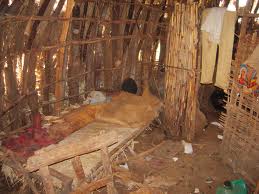
So much about parenting these kids is just a big mystery. How was Daniel as a baby? How did he sleep? What was his relationship like with his first parents? What was that last day like? How much of Lily's behavior is her expressing grief and confusion about her past and how much is just her (crazy toddler) personality?  I often wonder, "What would (birthparents names) do?"  Since their daily lives are so, so different from ours, it's often hard to even translate the question. There are no IKEAs in Ethiopia.  Their family slept all together on a mattress. Allen wrenches, bedtime routines, white noise machines, nightlights, toys, good night books, stuffed animals, alarm clocks, cribs, toddler beds, bunk beds.... None of these exist in rural Africa.

What would they do? Shake their heads at me and my crazy questions, probably.

inside a rural Ethiopian home


Tuesday, July 31, 2012

Yes, Chef!

My writing has been sidetracked a bit lately due to all the reading I've been doing. (ah, summer!)  Andrew gave me the new Marcus Samuelsson book for my birthday (while we ate at his restaurant Red Rooster- ta da!)


I highly recommend it to everyone who loves:
1. Ethiopia
2. Food
3. Cooking
4. Traveling
5. All of the above

Just a few pages in his memoir Samuelsson (I call him Marcus in my head, but I'm trying to be cool here.) reflects on his adoption to Sweden from Ethiopia, and the few memories he has from his early childhood in Africa.  He jokes kindly about all the adoptive mothers who come up to him to share their children's stories.

Ahem.

Here I am, a Marcus, I mean Chef Samuelsson stalker.  When Andrew and I went to Red Rooster for our anniversary this winter the Chef was there, and graciously agreed to my request to look at photos of our kiddos.  He sat down on the booth next to me, and taking my phone from my hands scrolled through my photo album.  He asked about them, their ages, etc.  Sigh. It was a marvelous moment (for me).

There are so few Ethiopian adoptees in America, and very, very few grown up ones. I think we adoptive moms have latched onto Samuelsson as a role model for our children, and his Swedish mother as ours. In Yes, Chef he is wonderfully affirming of his adoptive family, while honest about the complications and joys of reconnecting with his Ethiopian family.  He talks about the very different memories and experiences of his sister, who was 5 years old when they moved to Sweden.  Most movingly, he reflects on the ways in which his Ethiopian, Swedish, and international travels have combined to make him who he is now: a chef and business man with a family in Harlem.

If you live in or visit New York, I highly recommend eating at the Rooster.  (You'll need to make a reservation exactly one month in advance to get a table.)  The food is interesting and delicious, the service is warm and attentive, and you never know who might come in the door.  On our first visit we ate next to a former Governor!

Of course, Samuelsson is a chef: most of the book is about food.  Food preparation, food culture, tasting, traveling, discovering food.  If you like to cook it will make you want to go shopping at a farmer's market and pull out your big pots.  If you like to eat it will make you want to explore a new neighborhood or spice family.  I've found re-newed energy for perfecting my own doro wat.

And after you eat the doro wat or catfish at the Rooster, you might as well read the book too. It will make you hungry all over again.